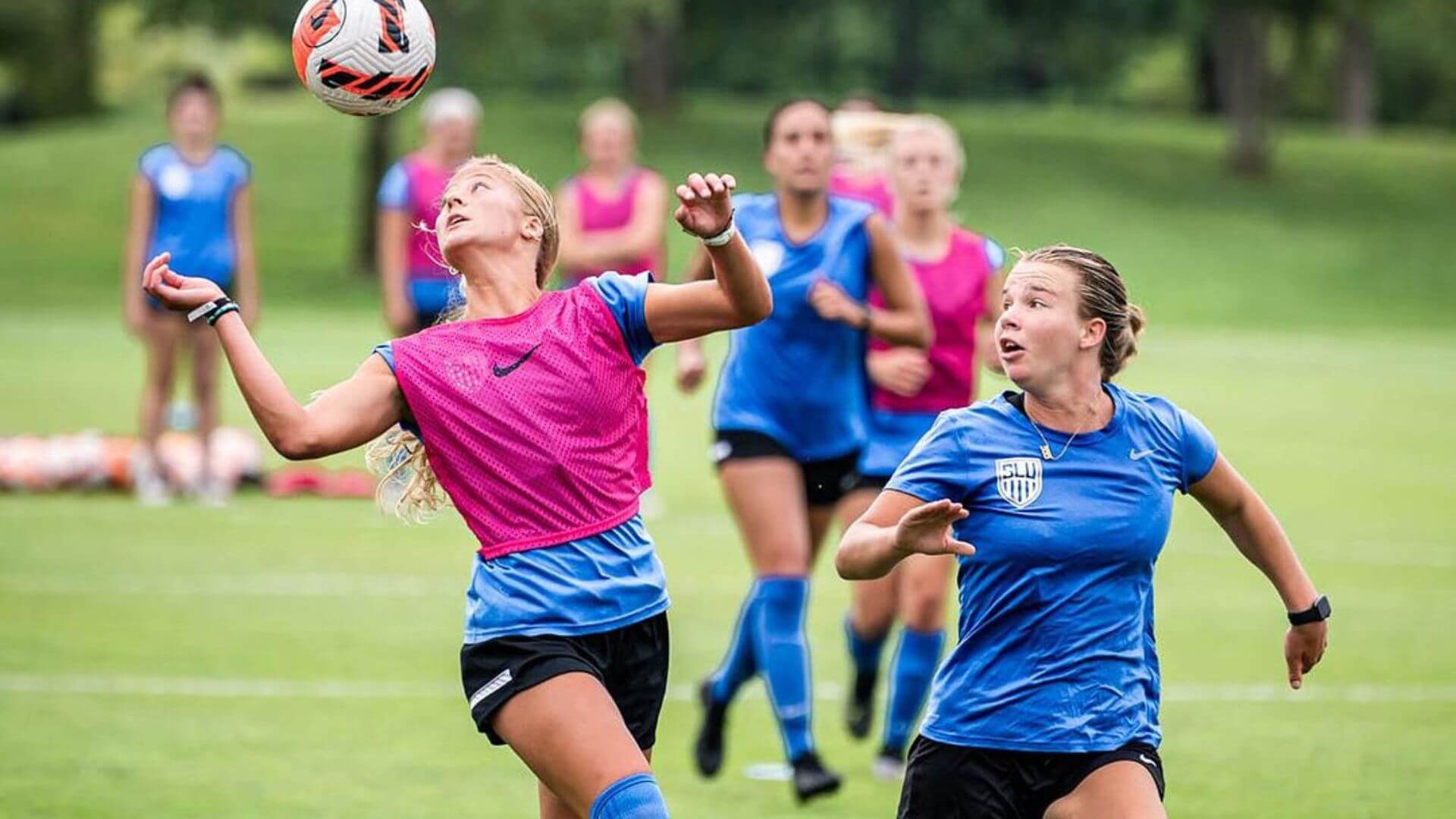
Youth soccer consists of competitive leagues, travel teams, and year-round training that can build discipline and confidence. But they also bring an increasing risk of overuse injuries. It is recommended that young athletes rotate sports in order to develop their strength and skillset in a well-rounded, optimal way.
There is the baseline risk of common injuries in girls’ soccer. However, unlike sudden sprains or collisions, overuse injuries develop slowly over time. They happen when young athletes train too hard, too often, without enough rest or recovery. For many dedicated female soccer players, this slow accumulation of stress can lead to pain, fatigue, and even long-term damage.
Why Female Soccer Players Face Higher Risk
- Female athletes experience unique physical and hormonal factors that make them more prone to overuse injuries. During growth spurts, bones lengthen faster than muscles can adjust, affecting coordination and flexibility. This is a very important piece of information to not just glance over, but to take in as an understanding of how to better protect our female athletes while teaching them how their bodies work. Education is the foundation of injury prevention.
- Structurally, girls tend to have a wider pelvis and different knee alignment than boys, increasing stress on the lower body during running, cutting, and pivoting. Add in hormonal changes, such as estrogen influencing ligament looseness, and the risk becomes even greater. This is why listening to how your body feels is important to the player.
- Early specialization plays a role. Many girls focus solely on soccer from a young age, training year-round instead of playing multiple sports. This repetitive motion without variety limits full-body development and heightens injury risk. The more full-body development gets focused on, the better an athlete becomes while lowering their risk to overuse injuries. It’s a win-win situation.
For these reasons, training should be tailored differently for males and females. It’s time attention is paid to these aspects of female athletes. The coach’s awareness on these risks for overuse injuries will play a part in developing body awareness and respect within each athlete. A player won’t learn to respect their body’s needs if a coach or parent is constantly pushing them to perform, instead of educating them on how to preserve their body for their future career.
Common Overuse Injuries in Youth Soccer
- Patellofemoral Pain Syndrome (Runner’s Knee)
Pain felt around or behind the kneecap, usually caused by repetitive bending, jumping, or running. It’s especially common in teenage girls during growth spurts, when changes in bone alignment and muscle balance put extra stress on the knees. Early recognition and strengthening can prevent long-term issues. - Shin Splints (Medial Tibial Stress Syndrome)
A dull, aching, or sometimes sharp pain along the inner edge of the shinbone. It often develops when training intensity, playing time, or running surfaces change suddenly. Without proper rest and gradual progression, shin splints can turn into more serious injuries like stress fractures. - Osgood-Schlatter Disease
Pain, swelling, or tenderness just below the kneecap, where the tendon attaches to the top of the shinbone. It’s common during puberty when bones grow faster than muscles and tendons can keep up. While it often resolves as growth slows, managing activity and stretching can ease discomfort and keep players active. - Stress Fractures
Tiny cracks in bones caused by repetitive impact or overuse, most commonly in the feet, shins, or lower legs. They often start as a mild, nagging ache that worsens with activity. Rest, proper nutrition, and avoiding overtraining are key to preventing small stress injuries from becoming major setbacks. - Achilles Tendinitis and Plantar Fasciitis
Inflammation or irritation in the tissues around the heel and ankle, either in the Achilles tendon or the plantar fascia along the bottom of the foot. These conditions cause stiffness, tenderness, and pain, particularly in the morning or after intense training. Regular stretching, mobility work, and recovery time can help prevent flare-ups.
Warning Signs Parents Shouldn’t Ignore
Pain that doesn’t go away after practice, swelling, or changes in movement (like limping or favoring one leg) are early warning signs.
Watch also for emotional cues such as irritability, fatigue, or loss of motivation. Many young players try to “push through” pain to avoid letting teammates down or because of their deep attachment to the sport, but this often leads to more serious injury. Pain is frustrating to deal with and often a sign of pushing past an athlete’s physical limits.
Prevention
The best way to prevent overuse injuries is simple: balance.
Encourage rest days while mixing in other activities like swimming, cycling, or yoga. These build overall strength and flexibility, simultaneously giving overused muscles and joints a break.
Prioritizing how warm-ups and cool-downs are performed is crucial. Dynamic stretching before games and static stretching afterward help improve circulation and prevent stiffness. Strength training focusing on balance and stability is especially key for the core, hips, and legs. Strength training creates stability around the joints and protects against injury.
A good rule of thumb: young athletes shouldn’t train in organized sports more hours per week than their age in years. So a 13-year-old shouldn’t have more than 13 hours of structured soccer training weekly. As well as taking 2-3 months off from their main sport per year. Preservation is truly the long game to a long career.
Nutrition
Proper nutrition fuels growth, performance, and healing. Make sure your young player gets enough:
- Protein for muscle repair.
- Complex carbs for sustained energy.
- Healthy fats for hormone support.
- Calcium and vitamin D for bone strength.
- Hydration and 9–11 hours of sleep per night are just as important as practice time–if not more. Sleep allows muscles and tissues to recover, preventing fatigue-related injuries.
When to Seek Professional Help
If pain persists, worsens, or limits daily movement, it’s time to see a professional. Pediatric sports medicine specialists or physical therapists can pinpoint the cause, correct imbalances, and design a recovery plan. Certain educated Personal Trainers or Coaches can train athletes for injury prevention and strength development. A trainer could be used after a sports medicine or physical therapy evaluation. Early attention prevents minor aches from becoming chronic issues that can sideline your child long-term.
Soccer should empower young girls, not lead to burnout and overuse injury. Parents play a key role in recognizing the signs of overuse, advocating for rest, and supporting well-rounded development. By balancing training with recovery and communication, you can help your daughter stay healthy, confident, and in love with the game for years to come.